
Mucogingival surgery
Gum graft
When gum tissue no longer covers the root or is too thin, soft-tissue surgery may be indicated. We establish the cause first; only then discuss grafting with clear, realistic planning.
Request assessmentAutologous tissue
CAF technique
Bologna training
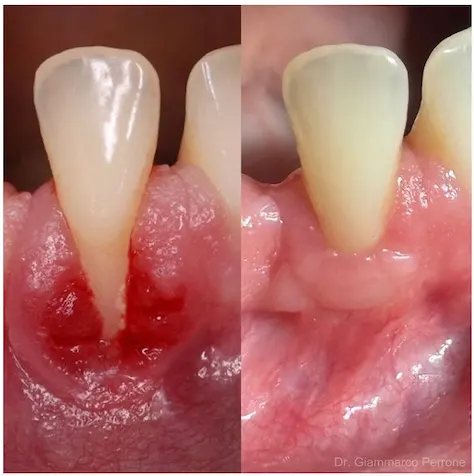
Definition
What is a gum graft?
Transplant of gum tissue—often from the palate—or repositioning of existing tissue to recover coverage or increase thickness.
When indicated: coronally advanced flap (CAF) and connective tissue graft. Training in Bologna with Prof. Giovanni Zucchelli and Prof.ssa Martina Stefanini (Master en greffe gingivale et parodontologie).
Training
Master en greffe gingivale et parodontologie
Le Dr Giammarco Perrone a obtenu le master universitaire de second niveau — Soft Tissue Management Around Teeth and Implants (IIIe édition, 2022 – 2024) à l'Università di Bologna avec Prof. Giovanni Zucchelli y Prof.ssa Martina Stefanini — référence en chirurgie mucogingivale.
Clinical context
Gum recession: when surgery is considered
Gingival recession exposes the root: teeth may look longer, with cold sensitivity or an uneven gum line.
Conservative care can stop progression but cannot regrow lost tissue. Surgical grafting is the evidence-based option for root coverage when individually indicated.
For patients
Why do gums recede?
Most people search for receding gums or gum recession, not “gum graft”. Our article covers causes, risks and when mucogingival surgery is appropriate.
Read: receding gums — causes and treatment →Reference technique
Coronally advanced flap (CAF) and connective tissue — Prof. G. Zucchelli
For most recessions on natural teeth we combine CAF with subepithelial connective tissue from the palate. Dr. Perrone trained at the University of Bologna with Prof. Giovanni Zucchelli and Prof.ssa Martina Stefanini (3rd ed., 2022–2024).
01
Diagnosis & phenotype
Depth, cause and periodontal stability before surgery.
02
CAF + palate graft
Tension-free flap design and autologous connective tissue underneath.
03
Follow-up
Sutures, hygiene instructions and reviews.
Why this approach
- Strong evidence for root coverage with proper case selection.
- Multiple adjacent recessions in one session when anatomy allows.
- Autologous tissue and keratinized band thickness control.
- Bologna-school microsurgery — no universal promise of full coverage.
Other techniques
When we consider alternatives
Free gingival graft
To increase thickness, including around implants.
Collagen matrix
Only when individually indicated to avoid a second donor site.
Techniques
What treatment may include
Connective tissue graft
From palate under a flap.
Free gingival graft
To increase thickness.
CAF
Coronally advanced flap.
Root coverage
Therapeutic goal.
Indication
When it may make sense
- Recession with sensitivity
- Exposed root aesthetics
- Thin phenotype
When to wait
Active periodontitis or traumatic brushing should be addressed first.
Conservative approach
Gingival phenotype and microsurgery
We assess phenotype, recession cause and periodontal stability before any root coverage with CAF or connective tissue from the palate; biomaterials only when individually indicated.
- Minimally invasive mucogingival surgery when appropriate.
- Autologous tissue first; biomaterials only if indicated.
- Bologna training with Prof. Zucchelli and Prof.ssa Stefanini.
Common causes
Why gums recede
- ·Periodontal disease
- ·Aggressive brushing
- ·Genetics and thin phenotype
- ·Bruxism
- ·Tooth malposition
- ·Traumatic factors
Diagnosis
How do you know if you need mucogingival surgery?
Mucogingival surgery uses healthy gum tissue from the palate (donor site) and places it where gums have receded, to cover exposed roots or increase thickness. We assess whether that step fits your case in clinic.
- ·Receded gums with exposed tooth roots
- ·Cold or heat sensitivity
- ·Uneven or aesthetically distracting gum line
- ·Recurrent inflammation or bleeding
Your pathway
Before, during and after surgery
01 · Before
Personalised planning
Detailed clinical assessment, procedure explained and prior periodontal treatment if needed.
02 · During
Minimally invasive surgery
Under local anaesthesia; post-op discomfort is usually mild. Often 1–2 hours depending on the case.
03 · After
Guided recovery
Soft diet, no smoking, prescribed rinses and scheduled reviews.
Benefits
What grafting may offer when indicated
Less sensitivity
Covering exposed roots often reduces cold discomfort.
Gum aesthetics
A more harmonious gingival line.
Thicker gum
Better protection and hygiene access.
Long-term stability
With cause control and periodontal maintenance.
Recovery
Healing timeline
Under local anaesthesia; discomfort is usually mild.
Week 1
Initial care
Soft diet and prescribed rinses.
2–4 weeks
Progressive hygiene
Suture removal and gentle brushing.
1–3 months
Graft integration
Coverage assessment.
Maintenance
Periodontal follow-up
Reviews to monitor stability.
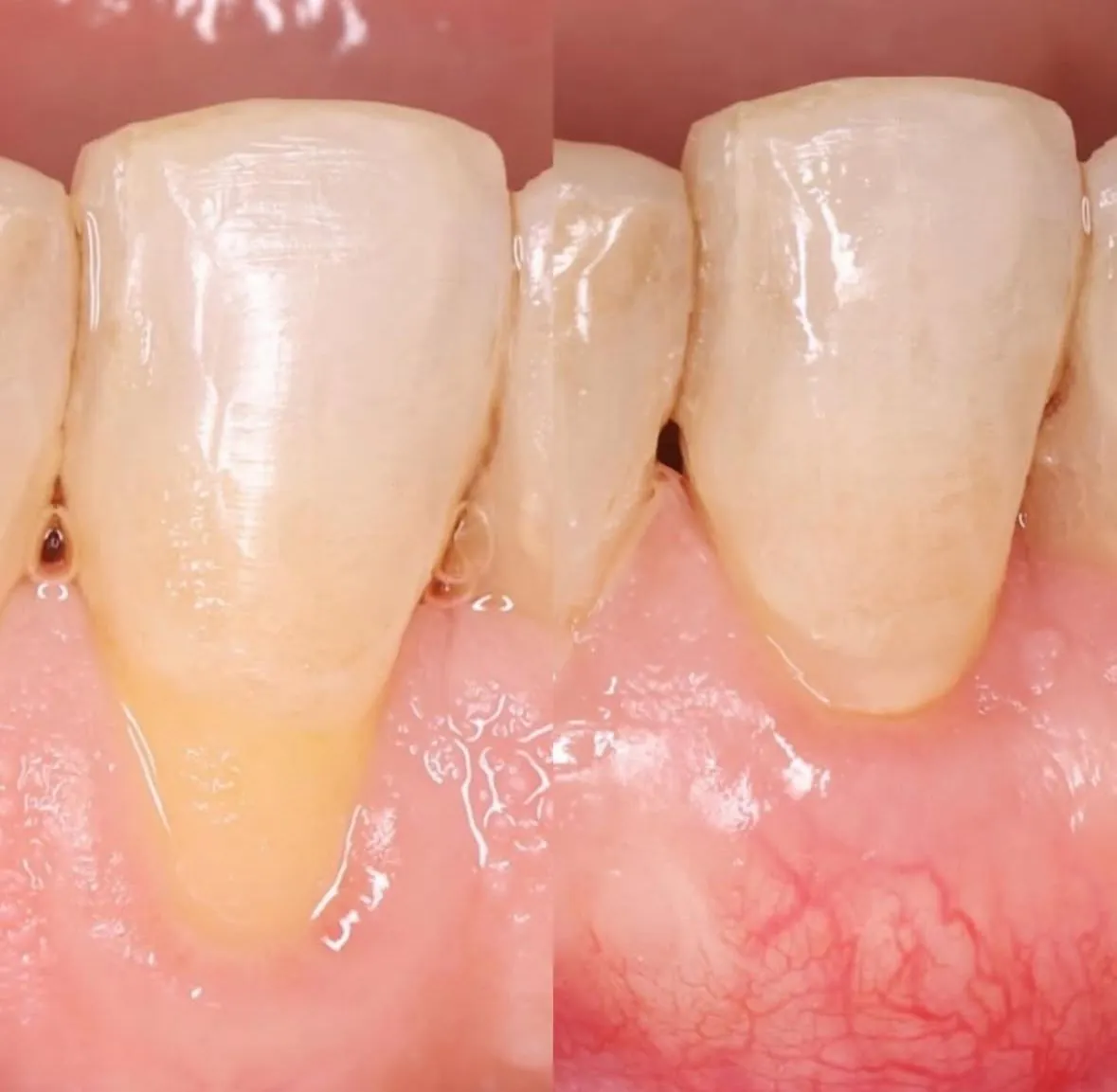
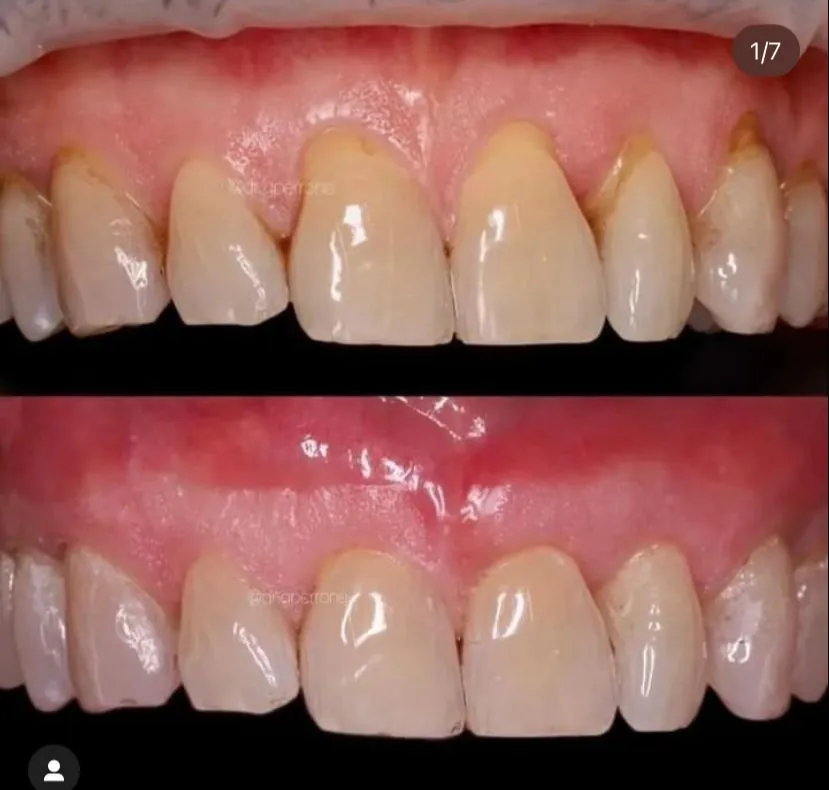
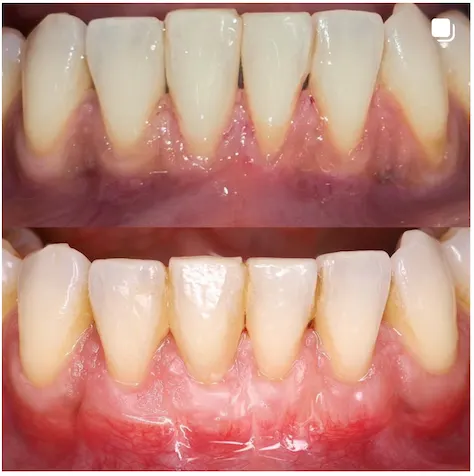
Outcomes
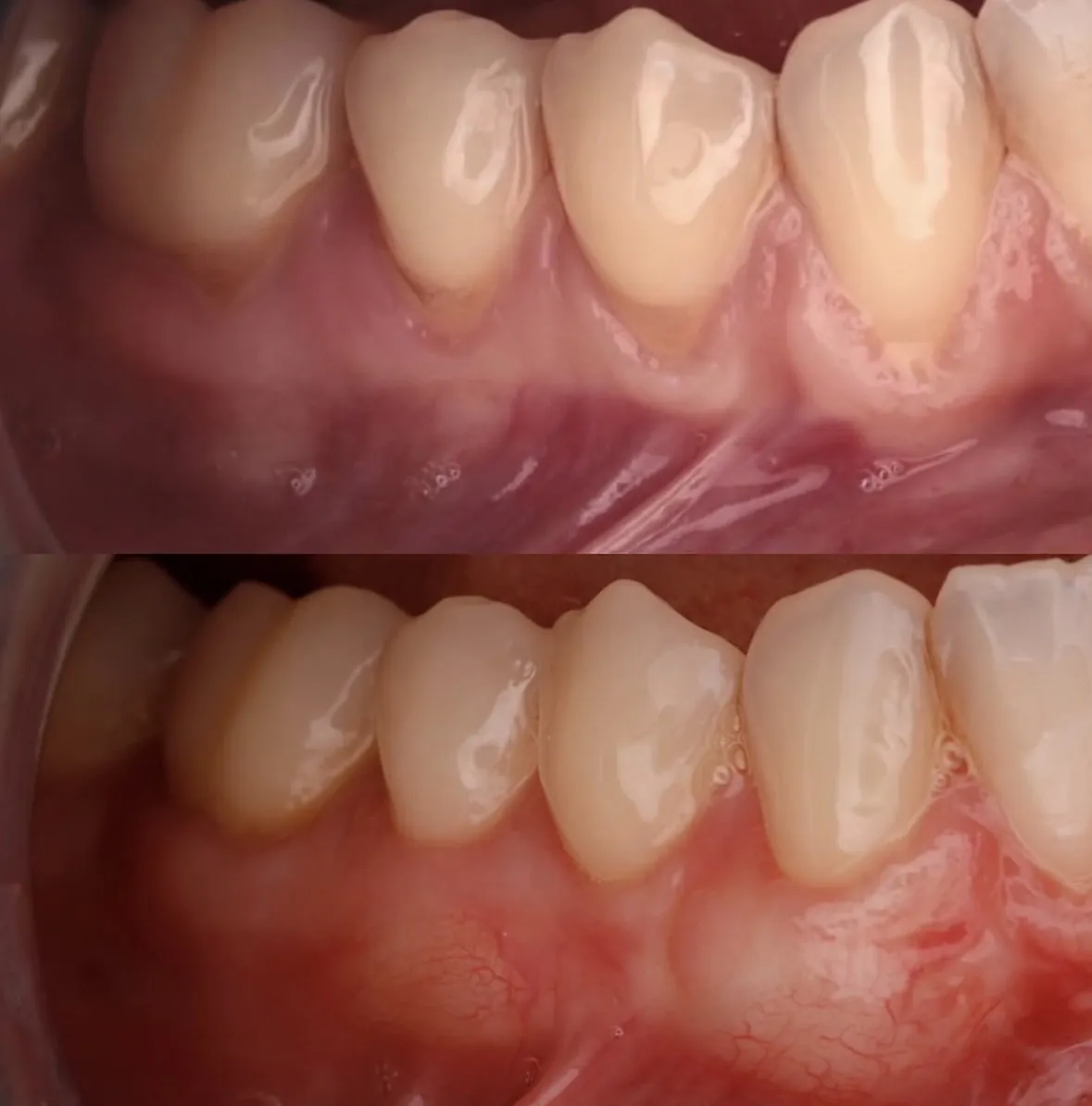
Cases at the practice
See the gingival recessions page for full detail.

The specialist
N.º 28013867 — COEM

Madrid
Dr. Giammarco
Perrone
Clinical director · Periodontics
«Soft tissue dictates the outcome.»
Soft tissue, periodontics and implants.
Biology first, then surgery if indicated.
- Training
- Master en greffe gingivale et parodontologie · Bolonia (IIIe édition, 2022 – 2024)
FAQ
Gum graft
What is a gum graft?
Soft-tissue surgery to cover exposed roots or increase gum thickness.
What is gingival phenotype?
Your natural gum thickness and type; it guides graft, CAF or watchful waiting.
Palatal connective tissue or biomaterial?
Autologous connective tissue is often the reference; biomaterials only when your case warrants it—no universal promise of full coverage.